Alima: A Handwritten Font for Warm, Authentic Branding
It was late, the coffee was cold, and I was staring at a blank brand board. The project was a visual refresh for a neighborhood bakery—a place known for sourdough loaves and a genuinely warm atmosphere. They needed something that felt human, crafted, and inviting, not corporate or overly polished. My usual sans-serif suspects felt too sterile. I needed a typeface with personality, a bit of charm, and a soft touch. That’s when I loaded Alima.
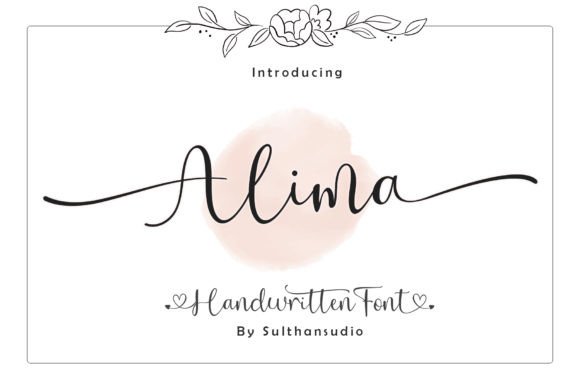
From the first click, Alima felt different. It’s described as a lovely and timeless handwritten font, and that’s precisely what it delivers. It doesn’t scream with dramatic, exaggerated flourishes; instead, it whispers with a consistent, elegant rhythm. Each letter has that unique and beautiful touch—a slight variation in stroke weight, a gentle curve on the ascenders, a perfectly imperfect baseline. It feels like someone with excellent penmanship took a moment to write carefully, not hastily. This was exactly the character the bakery’s identity needed.
The Visual Character and Mood of Alima
Alima sits comfortably in the Script Amp category, but it leans towards clarity and readability over wild decorative flair. Its personality is warm, approachable, and sophisticated without being formal. The mood it creates is one of authenticity and crafted quality. Think of a handwritten recipe card passed down through generations, a thoughtfully composed journal entry, or the elegant signage on a boutique shop window. It avoids the childish or overly casual vibe of some handwritten fonts, making it suitable for brands that want to feel personal but also professional.
In my test, I used Alima for the bakery’s primary logo mark. I typed the name, and immediately, it looked less like a default font and more like a designed element. The lowercase ‘a’ with its open bowl, the graceful connection in the ‘lm’ combination, and the overall balanced spacing gave it a standalone logo quality. It wasn’t just text; it was a brand mark. This is a key strength: Alima often looks like custom lettering, saving time and budget on actual hand-drawn work for many small to medium projects.
Real-World Testing in Brand Assets
Moving from the logo draft, I applied Alima across a suite of mockups to see how it performed.
- Business Cards & Packaging: On a brown paper bag mockup and a simple business card, Alima at a medium size looked fantastic. It translated the brand’s handmade ethos directly. On the bag, for a short line like “Fresh Daily,” it was eye-catching and clear. For longer information on the card (like an address), I opted for a clean sans-serif pair, as Alima’s script nature can slow readability in dense text blocks.
- Website Header & Social Graphics: In the website’s hero section, the bakery name in Alima created an instant emotional connection. It set the tone before the user even read the copy. For Instagram post graphics highlighting a single product or a short quote (“Made with Time”), it added a layer of visual interest that felt organic to the brand, not like a generic template.
- Signage & Larger Prints: Simulating a wooden shop sign, Alima held its grace at a large scale. The strokes gained presence without becoming clumsy. It maintained its timeless, handwritten feel even when blown up.
Where Alima Shines and Where to Be Cautious
Alima is, without doubt, a display font. Its best uses are for headlines, logos, short phrases, accent text, and decorative elements. It’s the perfect choice for creating eye-catching logos, branding moments, and quotes, as its description states. It influences brand perception by injecting warmth and human touch, fostering a sense of familiarity and trust with an audience.
However, its application requires thoughtful restraint. It is not suited for long body text, formal corporate documents, dense paragraphs on websites, or any situation where ultimate readability at small sizes is critical. Using it for a full menu’s item descriptions or lengthy terms and conditions would be a mistake. The script style, while clear, is meant for impact, not for endurance reading.
Practical Pairings and Design Considerations
A font like Alima never works alone; it needs a supporting cast. For the bakery project, I paired it with a sturdy, geometric sans-serif for all body text and informational hierarchy. This combination allowed Alima to be the emotional voice, while the sans-serif handled the practical communication. It also paired beautifully with a simple serif font for longer story-driven copy on the website, like the bakery’s history paragraph. The key is to choose pairing fonts that are neutral and structured to ground Alima’s organic flow.
Before committing to Alima for final client work, I recommend a rigorous test:
- Place it on every key mockup you’ll need: logo, packaging, web header, social post.
- Print a sample business card at actual size. Script fonts can look different on screen versus on paper.
- Check how it renders on various backgrounds—light, dark, textured.
- Test its legibility on mobile screens for any web use.
Since the product description emphasizes that every letter has a unique touch, explore the character set. Look for alternates if available, and check for ligatures that might enhance specific letter combinations in your logo. Also, confirm multilingual support if your client’s audience requires it.
A Note on Licensing and Final Thoughts
As with any commercial font, a crucial step is checking the licensing terms before finalizing any design work. Understand the permitted uses for Alima regarding client branding, packaging, merchandise, web embedding, and template or product creation. This protects you and your client and ensures the beautiful touch you’re adding to their brand is fully legitimate.
After my testing journey, Alima proved to be a reliable and charming tool. It didn’t try to do everything, which is why it excels in what it does. It offers a specific, timeless handwritten aesthetic that can elevate a brand from generic to genuine. For designers working on boutique identities, creative studios, cafés, skincare brands, handmade shops, or any project where authenticity is the core message, Alima provides a ready-made, beautifully crafted voice. It’s a font that lets you start designing with character, right from the first blank brand board.